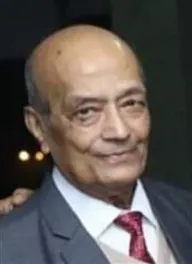
On a warm evening in Laheriasarai, the narrow lanes around Bengali Tola would often see a quiet stream of patients waiting outside a modest house. They had come from distant villages of Darbhanga, Madhubani, and Jhanjharpur, many after long journeys by bus or bicycle. Inside lived Dr Mohan Mishra, a physician whose life had been devoted to fighting one of Bihar’s most feared diseases—Kala-azar. For decades, this illness had haunted the villages of north Bihar, claiming countless lives. But through careful research, compassionate treatment, and a relentless commitment to public health, Dr. Mishra helped transform the battle against the disease. His work, much of it carried out at Darbhanga Medical College and Hospital, would eventually earn him national recognition, including the Padma Shri—yet for many people in Mithila, he remained simply a trusted doctor who never turned away a patient in need.
Dr Mohan Mishra (19 May 1937 – 6 May 2021) was an Indian physician, medical teacher, and researcher from Bihar who became widely known for his pioneering work on Visceral leishmaniasis, commonly called Kala-azar.
His research helped establish the use of Amphotericin B as an effective treatment for the disease, which has long affected many districts of north Bihar.
In recognition of his contributions to medicine and public health, the Government of India honoured him with the Padma Shri in 2014.
Dr Mohan Mishra spent most of his professional life serving patients and teaching students at Darbhanga Medical College and Hospital, one of the oldest medical institutions in eastern India.
Early Life
Dr Mohan Mishra was born on 19 May 1937 in Koilakh, located in the Madhubani district of Bihar.
The region was historically affected by poverty and infectious diseases, including Kala-azar. These conditions shaped his early understanding of public health challenges in rural India.
After completing his medical education, he chose to build his career in Bihar, working closely with communities that had limited access to specialised healthcare.
Medical Career
Dr Mohan Mishra began his professional career in 1962 when he joined Darbhanga Medical College and Hospital as a Resident Medical Officer.
During his long association with the institution, he developed a reputation as a skilled clinician and dedicated teacher.
Important milestones in his career include:
- 1962: Joined Darbhanga Medical College and Hospital as Resident Medical Officer
- 1970: Took a sabbatical to obtain MRCP in the United Kingdom
- 1979: Appointed Professor of General Medicine
- 1984: Awarded FRCP (Edinburgh)
- 1986: Became Head of the Department of General Medicine
- 1988: Received FRCP (London)
- 1995: Voluntarily retired from Darbhanga Medical College and Hospital
During his career, he trained numerous medical students who later went on to serve as doctors and specialists across India.
Research on Kala-azar
Dr. Mishra’s most important contribution was his research on Kala-azar, a parasitic disease transmitted through sandflies.
For many years, north Bihar was one of the worst-affected regions in the world. The disease caused prolonged fever, severe weakness, and often death if untreated.
Through research supported by the World Health Organization, Dr. Mishra studied new treatment methods for the disease.
In 1991, he published an article in the renowned medical journal The Lancet, proposing the use of Amphotericin B for the treatment of Kala-azar.
At the time, this was considered an innovative approach. Over the years, Amphotericin B became one of the most widely used treatments for Kala-azar across the world.
Other Scientific Work
Arsenic in Drinking Water
Dr. Mishra also conducted research on arsenic contamination in drinking water, a serious public health problem in parts of Bihar and neighbouring regions.
Working with his son Narottam Mishra, he developed a low-cost method to remove arsenic from drinking water using food-grade alum, making the solution affordable for rural communities.
Research on Brahmi
He also studied the medicinal herb Bacopa monnieri, traditionally used in Indian medicine.
His research suggested that Brahmi could have potential benefits in the treatment of Dementia. This study was registered in a WHO Primary Registry and later presented at an international medical conference organised by the Royal College of Physicians in London in 2018.
Books and Writings
Apart from medical research, Dr Mohan Mishra was also a prolific author. He wrote both medical textbooks and books on Indian history and politics.
Medical Books
- A Textbook of Clinical Medicine
- Clinical Methods in Medicine
These books were widely used by medical students for understanding clinical examination and diagnosis.
Other Non-fiction Works
Dr. Mishra also wrote several books on Indian history and civilisation, including:
- Unfinished Story: A History of the Indian Freedom Movement 1857–1947
- Building an Empire – Chanakya Revisited
- Mangal Pandey to Lakshmibai: A Story of the Indian Mutiny 1857
- India Through Alien Eyes
His writings reflected his deep interest in history, politics, and Indian intellectual traditions.
Public Service
After retiring in 1995, Dr. Mishra continued to serve society. He lived in Laheriasarai, where he remained active in social work.
He regularly organised free medical camps in rural areas of Darbhanga, Jhanjharpur, and Madhubani, helping people who had little access to healthcare.
He also served on expert committees on Kala-azar formed by the Government of Bihar and the Government of India. In addition, he worked as an expert member for the Union Public Service Commission and as an inspector for the Medical Council of India.
Awards and Recognition
Dr Mohan Mishra received several honours for his work in medicine and research.
Among the most notable recognitions were:
- Padma Shri (2014) by the Government of India
- Dr. Rajendra Prasad Oration Award from the Rajendra Prasad Memorial Research Institute for his work on Kala-azar
- Literary recognition for his historical writings
- Wishing Shelf Award (2012) for his book India Through Alien Eyes
Legacy
Dr Mohan Mishra passed away on 6 May 2021, leaving behind a remarkable legacy in medicine, research, and education.
For the people of Mithila, he remains one of the region’s most respected doctors. His work on Kala-azar helped improve treatment and save countless lives, while his dedication to teaching shaped generations of medical professionals.
His life stands as an example of how knowledge, compassion, and commitment can transform public health in underserved regions.
#FollowUs
Discover more from Mithila Delights
Subscribe to get the latest posts sent to your email.