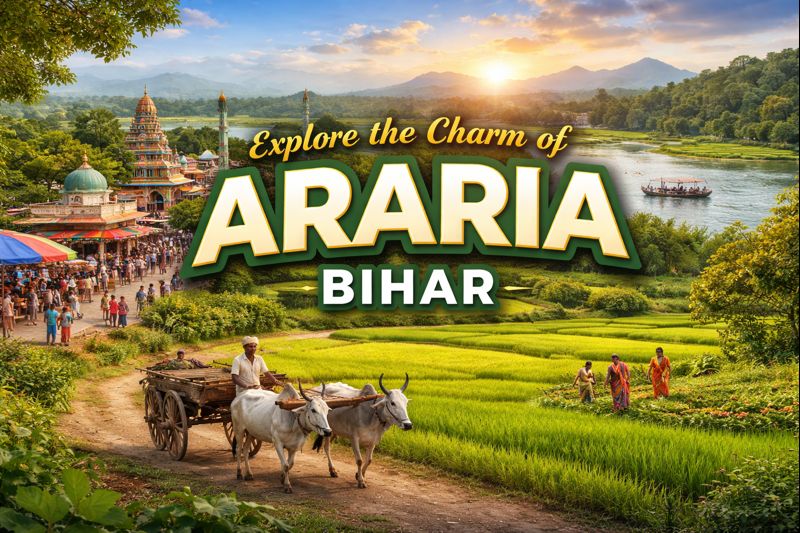
Introduction to Araria
Tucked away in the northeastern corner of Araria, close to the India–Nepal border, lies a region that quietly carries stories of history, harmony, and hope. Often overlooked in mainstream travel and development narratives, Araria is one of Bihar’s lesser-known districts that deserves a closer look. It is a land where rural simplicity blends with cultural depth, where fertile fields stretch to the horizon, and where communities live with a strong sense of belonging.
Araria may not boast grand monuments or bustling metros, but its real strength lies in its people, traditions, and natural surroundings. For travellers seeking authentic regional experiences, history enthusiasts curious about borderland narratives, or investors looking beyond saturated markets, Araria offers much to explore.
Historical Significance of Araria
The history of Araria is closely tied to the broader historical journey of the Mithila and Purnia regions. For centuries, this area functioned as a transitional zone—geographically and culturally—between Bihar, Bengal, and Nepal. Trade routes once passed through this belt, connecting local agrarian economies with larger markets.
During the British colonial period, Araria formed part of the Purnea district. Indigo cultivation and revenue administration shaped much of its economic structure at the time. The district itself was carved out later, reflecting administrative needs rather than a lack of historical roots. The freedom movement also touched Araria, with local participation in national protests and grassroots political awareness gradually taking shape.
While Araria may not feature prominently in textbook history, its past is woven into everyday life—through oral traditions, local customs, and a collective memory shaped by resilience and adaptation.
Cultural Diversity and Traditions
One of Araria’s most striking features is its cultural diversity. The district is home to people from different linguistic, religious, and social backgrounds who have lived together for generations. Languages such as Hindi, Urdu, Maithili, and Surjapuri are commonly spoken, often blending seamlessly in daily conversation.
Festivals are an integral part of life here. Chhath Puja is celebrated with deep devotion along rivers and water bodies, while Eid, Holi, Diwali, and Durga Puja reflect the region’s shared cultural space. Folk songs, local storytelling, and traditional attire add colour to everyday routines, especially during weddings and harvest seasons.
Food in Araria mirrors its diversity—simple, hearty, and rooted in local produce. Rice, pulses, seasonal vegetables, and fish form the backbone of daily meals, with subtle variations across communities. Hospitality remains a core value, making visitors feel welcomed rather than treated as outsiders.
Natural Beauty and Attractions
Araria’s natural beauty lies in its understated landscapes. Lush green fields, rivers, ponds, and open skies dominate the scenery. The district receives ample rainfall, giving it fertile soil that supports agriculture throughout the year. Early mornings in rural Araria, with mist hovering over fields and birds calling out, offer a calm rarely found in urban spaces.
While Araria is not yet developed as a tourism hub, nearby riverbanks, village trails, and local markets provide immersive experiences for travellers interested in slow tourism. The proximity to Nepal also adds a cross-border cultural flavour, visible in trade, accents, and everyday interactions.
For nature lovers and photographers, Araria offers raw, unfiltered rural India—an experience that feels genuine and deeply human.
Economic and Social Aspects
The economy of Araria is primarily agrarian. Crops like rice, maize, wheat, jute, and pulses dominate agricultural output. Small-scale trading, dairy farming, and local businesses support livelihoods across towns and villages. Weekly markets, known for their vibrancy, serve as economic and social gathering points.
In recent years, there has been growing emphasis on education, infrastructure, and connectivity. Roads, digital services, and banking access have improved steadily. Migration remains a reality, with many residents working in other states, but remittances play a significant role in the local economy.
For investors and entrepreneurs, Araria presents opportunities in agro-based industries, food processing, logistics, education services, and small manufacturing units. With rising government focus on regional development, the district holds long-term potential for sustainable growth.
Conclusion: The Future of Araria
Araria stands at an important crossroads. Rooted in tradition yet gradually embracing change, it reflects the larger story of Bihar’s transformation. Its cultural harmony, fertile land, and hardworking population form a strong foundation for future development.
For travellers, Araria offers an honest glimpse into rural Bihar. For researchers and cultural explorers, it provides a living archive of social diversity. And for investors, it represents untapped potential waiting to be shaped responsibly.
As attention slowly turns toward regions beyond the usual urban centres, Araria may well emerge as one of Bihar’s quiet success stories—grounded, resilient, and full of promise.
Discover more from Mithila Delights
Subscribe to get the latest posts sent to your email.