Darbhanga: Where History Breathes and Culture Lives
Tucked away in the heart of north Bihar, Darbhanga is not a city that shouts for attention. It doesn’t compete with India’s megacities or package itself as a glossy tourist destination. Instead, Darbhanga reveals itself slowly—through its lanes, its people, its music, its festivals, and its deep-rooted intellectual and cultural traditions.
To understand Darbhanga is to understand Mithila—a civilization older than many modern nations, known for learning, art, philosophy, and refined social values. This blog explores Darbhanga not as a checklist of places, but as a living cultural landscape shaped by centuries of history.
The Historical Backbone of Darbhanga

Darbhanga’s historical significance is inseparable from the rise of the Darbhanga Raj, one of the most powerful zamindari estates during British India. The Maharajas of Darbhanga were not merely feudal lords; they were patrons of education, art, Sanskrit scholarship, and public welfare.
The city grew as an administrative and cultural centre under their patronage. Libraries, schools, temples, ponds, and dharamshalas were built with a vision that combined tradition with public good. This legacy still shapes the city’s intellectual character today.
Darbhanga Raj and the Idea of Cultural Leadership
The rulers of Darbhanga believed that power carried responsibility. They funded Sanskrit tolas (traditional schools), encouraged Maithili literature, and supported scholars from across the subcontinent. In many ways, Darbhanga functioned as a cultural capital of Mithila rather than just a political one.
Darbhanga Fort: Stone, Silence, and Stories
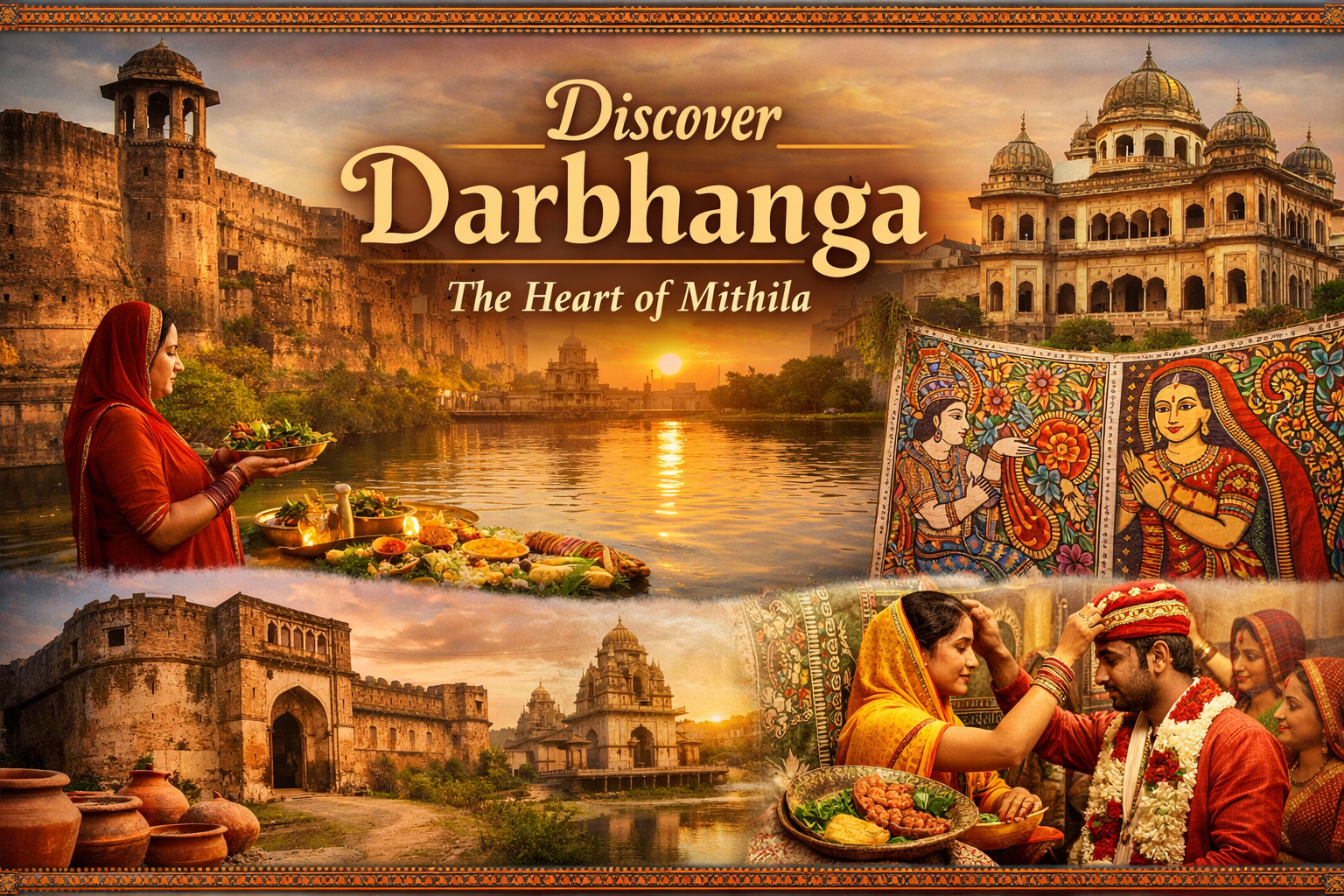
No exploration of the city is complete without Darbhanga Fort. Locally known as Kila Darbhanga, the fort stands not as a polished monument but as a quiet witness to history.
Its thick walls, sprawling courtyards, and fading structures tell stories of royal processions, scholarly debates, colonial negotiations, and changing times. Unlike many restored forts, Darbhanga Fort feels raw and real—untouched by excessive tourism, allowing imagination to do the work.
Walking around the fort is less about photography and more about reflection. It reminds visitors that history does not always arrive with plaques and guides; sometimes it simply stands, waiting to be noticed.
Mithila Culture: The Soul of Darbhanga
Darbhanga is best understood not through buildings but through Mithila culture, which continues to thrive in daily life.
Maithili Language and Literature
Maithili is not just a spoken language here; it is an emotional and cultural identity. From folk songs to formal poetry, from everyday conversations to wedding rituals, Maithili binds the people together.
Darbhanga has produced poets, linguists, and scholars who contributed significantly to Indian literature. Even today, discussions on language, grammar, and culture are common in academic circles and local gatherings alike.
Mithila Painting: Art Beyond Canvas

Often known globally as Madhubani art, Mithila painting originated as a ritual art practiced by women on mud walls and floors. In Darbhanga, this art form still exists beyond galleries—adorning homes, marriage venues, and community spaces.
The themes—nature, mythology, social harmony—reflect a worldview where art is not separate from life. Each line and colour carries symbolic meaning passed down through generations.
Festivals and Traditions: Living Rituals
Festivals in Darbhanga are not events; they are experiences rooted in collective memory.
Chhath: Devotion and Discipline
Chhath Puja is celebrated with unmatched devotion. Families gather along ponds and riverbanks, offering prayers to the Sun God with strict discipline and humility. The atmosphere is quiet, spiritual, and deeply moving—free from noise and spectacle.
Weddings the Mithila Way
A Mithila wedding is a cultural education in itself. From panji prabandh (genealogical matching) to symbolic rituals conducted in Maithili, marriage here is a sacred social institution, not a mere celebration.
Education and Intellectual Legacy

Darbhanga’s reputation as an educational centre predates modern universities. Sanskrit learning flourished here for centuries, and this scholarly spirit continues today.
Institutions like Lalit Narayan Mithila University attract students from across Bihar and neighbouring states. The city remains a hub for humanities, social sciences, and traditional studies.
Libraries, debates, poetry readings, and academic discussions are still part of Darbhanga’s everyday rhythm.
Everyday Darbhanga: Markets, Food, and People
Local Bazaars
Darbhanga’s markets are vibrant without being overwhelming. From booksellers and cloth merchants to sweet shops and tea stalls, the bazaars reflect the city’s balanced pace of life.
Mithila Cuisine: Simple, Seasonal, Satisfying
Food in Darbhanga is understated yet rich in tradition. Dishes are often seasonal, minimally spiced, and rooted in local produce.
Popular items include:
- Arikanchan rice preparations
- Kadhi-bari
- Seasonal vegetables cooked in mustard oil
- Traditional sweets made during festivals
Meals here are less about indulgence and more about nourishment and balance.
Religious and Spiritual Harmony
Darbhanga has long been a space where different faiths coexist quietly. Temples, mosques, and shrines often stand within walking distance of each other, reflecting centuries of shared living.
Spirituality here is personal and grounded—less performative, more reflective.
Darbhanga Today: Between Past and Future
Modern Darbhanga is changing. Roads are improving, educational aspirations are growing, and digital connectivity is expanding. Yet, the city has largely resisted losing its cultural core.
Young people still speak Maithili at home. Festivals still follow traditional calendars. Elders still value learning and humility. Progress here does not mean erasure—it means continuity.
Why Darbhanga Matters
Darbhanga may not feature on most tourist maps, but for those who seek meaning beyond monuments, it offers something rare: a living civilization.
It teaches us that heritage is not only preserved in museums—it survives in language, customs, food, and everyday choices. Darbhanga stands as a reminder that India’s cultural richness lies as much in its quieter cities as in its famous landmarks.
For travellers, historians, students, and cultural explorers, Darbhanga is not a destination to “cover.”
It is a place to experience, listen to, and slowly understand.
Discover more from Mithila Delights
Subscribe to get the latest posts sent to your email.