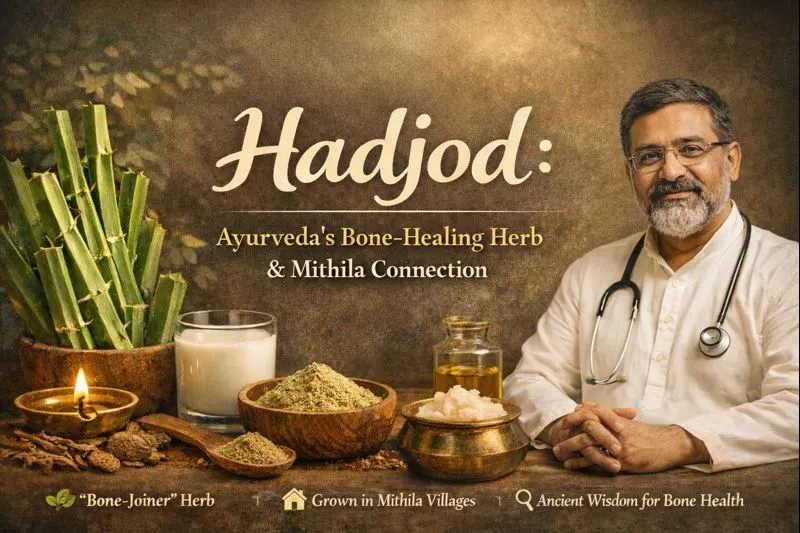
Hadjod (Cissus quadrangularis): Ayurveda’s Trusted Herb for Stronger Bones — and Its Quiet Presence in Mithila
Health & Ayurveda
When people in India talk about home remedies for bone pain, fractures, or weakness, one plant is mentioned again and again—Hadjod.
In Ayurveda, Hadjod is not treated as a trend or a “new discovery.” It is an old, trusted companion—one that has been used for generations to support bone strength, fracture recovery, and joint comfort.
And in Mithila, where folk wisdom still lives alongside modern medicine, it continues to hold its place as a plant people respect—sometimes grown quietly near homes, sometimes found in the wild, and often remembered through family advice.
“When bones feel weak, our elders don’t always run to tablets first. They remember what the earth has provided.”
— A common sentiment shared in rural Mithila homes
What Exactly Is Hadjod?
This is a medicinal climber known in Ayurveda for its connection with bone healing and strengthening. Its scientific name is Cissus quadrangularis.
If you have ever seen a plant with thick, jointed, angular stems climbing over fences or small trees, there’s a chance you’ve seen it.
It is also popularly called:
- Bone Setter Plant
- Veldt Grape
- Asthisamharaka (Sanskrit name meaning “that which joins bones”)
The name “Hadjod” itself is meaningful—because in common language, it directly points to “joining bones.”
“Even the name tells you what the plant is famous for—Hadjod is literally known as the bone-joiner.”
— Ayurvedic practitioners often explain it this way
Hadjod in Ayurveda: Why It Is Known as the “Bone-Joiner”
In Ayurveda, it is traditionally used in conditions where the body needs support for healing and strength, especially related to:
1) Bone Healing and Fracture Recovery
Hadjod has long been used as a supportive herb during fracture recovery, usually under guidance of traditional healers or Ayurvedic practitioners.
It is considered helpful in improving the body’s natural ability to repair and strengthen.
2) Joint Pain and Swelling
Many people use Hadjod for joint discomfort, especially when pain is linked to inflammation or weakness.
This is why it often appears in Ayurvedic conversations around:
- knee pain
- body stiffness
- swelling after injury
- general joint weakness
3) Overall Strength and Recovery
In traditional thinking, it is not only for “broken bones.” It is also considered a strength-building herb, used in recovery phases when the body feels drained or weak.
How People Traditionally Use Hadjod (Simple and Common Forms)
Across India, it is used in several ways. The method depends on region, tradition, and the person’s condition.
Some common forms include:
Hadjod Powder (Churna)
Often mixed with warm water, milk, or honey—depending on what the practitioner advises.
Hadjod Juice
Fresh stem juice is sometimes used in folk traditions, though it must be done carefully and responsibly.
Herbal Capsules / Extracts
Today, many people use it in ready-made Ayurvedic supplements.
Paste for External Use
Some communities apply a paste externally for swelling or discomfort, usually as part of traditional home care.
“In villages, remedies are often simple—fresh plant, warm milk, rest, and patience.”
— A common traditional approach
Important note: Even natural herbs can cause side effects if used incorrectly, especially in high doses or without medical advice.
Hadjod and Mithila: Local Connection and Local Language
Mithila has a long tradition of using plants for everyday wellness. People may not always know the botanical name, but they often know the plant by:
- its local nickname
- its shape
- its purpose
- and the way elders recommend it
In many Mithila households, Hadjod is commonly recognised through the Hindi name “Hadjod”, and sometimes described simply as:
- “Haddi jodne wala paudha” (the plant that helps join bones)
Because Mithila is multilingual (Maithili, Hindi, Urdu, and local dialects), the exact name may vary from village to village. But the idea remains the same: this is the bone-support herb.
“Mithila has always had two doctors—one in the clinic, and one in the courtyard garden.”
— A popular rural expression
Is Hadjod Cultivated in Mithila?
This is a very practical question—and the answer is: sometimes yes, but not like a commercial crop.
In Mithila, Hadjod is generally seen in two ways:
1) Grown Informally Near Homes
Some families keep medicinal plants close by—especially those that are easy to grow and useful in emergencies.
Hadjod can be grown along:
- boundary walls
- bamboo supports
- fences
- small trellises
2) Found Wild or Semi-Wild
Because it is a hardy climber, it can also appear naturally around:
- field edges
- unused corners of land
- village paths
- shrub areas
So while you may not find large farms dedicated to Hadjod, you can find it quietly present in the landscape—especially in rural belts.
What Makes Hadjod So Popular for Bone Health?
The popularity of Hadjod comes from one simple reason:
People believe it works—and it has been trusted for generations.
Modern research has also explored Cissus quadrangularis for its potential effects on:
- bone regeneration
- inflammation control
- pain reduction
- healing support
However, it’s important to understand that traditional use and scientific evidence are not always the same thing. Some findings are promising, but medical decisions should still be made carefully.
Who Should Be Careful With Hadjod?
Even though Hadjod is natural, it may not suit everyone.
You should be especially cautious if you are:
- pregnant or breastfeeding
- diabetic (some herbs may affect sugar levels)
- taking blood-thinners or long-term medicines
- dealing with kidney or liver issues
- preparing for surgery
- giving it to children without medical guidance
If you have a fracture, severe pain, or swelling, the safest approach is to combine:
- proper medical diagnosis
- imaging (X-ray if needed)
- professional treatment
…and only then consider herbal support as an additional step.
A Simple Takeaway: Tradition With Responsibility
Hadjod is one of those rare herbs that sits at the intersection of Ayurvedic tradition and everyday Indian life. In Mithila, it is remembered not as a fancy product, but as part of lived experience.
But like all health-related remedies, it should be approached with respect and caution.
“Herbs are not magic. They are support. Healing still needs time, care, and the right guidance.”
— A sensible approach from traditional healers
Frequently Asked Questions (FAQs)
1) Is Hadjod good for fractures?
Traditionally, yes—it is widely used in Ayurveda as a supportive herb during fracture healing. However, fractures must be properly treated by a medical professional.
2) Can Hadjod replace calcium tablets?
No. it is not a direct replacement for calcium or vitamin D if your doctor has prescribed them. It may be used as supportive care only under guidance.
3) Can I take Hadjod daily?
Some people do, but dosage and duration should be decided by a qualified Ayurvedic practitioner based on your body type and health condition.
4) Is it available in Mithila?
It can be found in parts of Mithila—often grown informally or found semi-wild. Availability depends on locality.
Sponsored:
Hadjod Supplement Review: Worth Buying?

If you want an Ayurvedic herb that supports bone strength and joint mobility, Hadjod is a classic option. It’s known as Asthisamharaka and is commonly used in traditional wellness routines. It is easy to add to daily routine. It is traditional Ayurvedic support for bones and available in powder and capsule form.
Disclaimer (Please Read)
This article is written for general awareness and educational purposes only. It does not provide medical advice, diagnosis, or treatment. Herbal remedies—including Hadjod (Cissus quadrangularis)—may have side effects, interactions, or risks depending on an individual’s health condition, medicines, age, and medical history.
Always consult a qualified doctor or certified Ayurvedic practitioner before using Hadjod for fractures, bone weakness, joint pain, or any health condition. In case of injury, severe pain, swelling, or suspected fracture, seek medical attention immediately.
#FollowUs
Discover more from Mithila Delights
Subscribe to get the latest posts sent to your email.