Kusheshwar Asthan Bird Sanctuary: Bihar’s Quiet Haven for Migratory Birds
A wetland of national importance where wildlife, livelihoods, and conservation meet
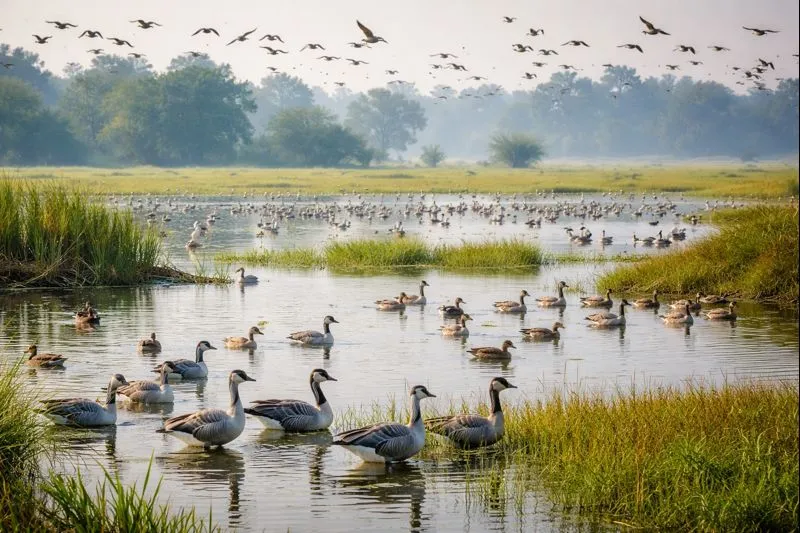
In the floodplains of north Bihar, where rivers shape the land and seasons decide the rhythm of life, Kusheshwar Asthan Bird Sanctuary stands out as a rare and valuable natural space. Spread across a large wetland landscape in Darbhanga district, the sanctuary becomes a vibrant home for resident and migratory birds, especially during winter. It is also a living reminder of how fragile wetlands are—and how urgently they need protection.
A sanctuary built by water and seasons
Kusheshwar Asthan Bird Sanctuary is not a typical forest reserve. It is a wetland ecosystem, formed and sustained by seasonal flooding and water spread across low-lying areas. For much of the year, the region looks like a vast water body dotted with reeds, grasses, and patches of farmland on higher ground.
This changing landscape is what makes it so important for birds. When water levels rise, it creates feeding and nesting spaces. When water begins to recede, it exposes shallow zones rich in aquatic life—ideal for many species that depend on wetlands for survival.
Unlike enclosed parks with fixed boundaries, wetlands like Kusheshwar Asthan are dynamic. They expand and shrink with rainfall, river flow, and local drainage. That natural cycle supports biodiversity, but it also makes management more complex.
Why migratory birds return here
Every winter, Kusheshwar Asthan becomes a seasonal destination for migratory birds that travel thousands of kilometres from colder regions. These birds arrive looking for three basic needs: food, safety, and open water.
The Kusheshwar Asthan Bird Sanctuary offers all three. Its shallow waters hold fish, insects, and aquatic plants. Its open stretches provide space for large flocks to rest. And its quieter pockets allow birds to stay away from frequent disturbance—when the habitat remains undisturbed.
Birdwatchers and nature lovers often describe winter mornings here as the most rewarding. Flocks gather on water surfaces, birds call across the wetland, and movement is constant. For local communities, these months also bring attention to an area that otherwise remains outside the mainstream tourism map.
A wetland that supports people too
Kusheshwar Asthan is not only a wildlife habitat. It is also part of a human landscape where farming, fishing, and seasonal work remain central to daily life. Many families depend on wetland resources in different ways—directly or indirectly.
In wetland areas across Bihar, water brings both opportunity and hardship. It improves soil fertility in some seasons, but it also floods fields and disrupts road access in others. The sanctuary exists within this larger reality, where conservation cannot be separated from livelihoods.
This is why wetland protection often requires balance. Strict restrictions without community engagement can lead to conflict. At the same time, unregulated activity can damage the very ecosystem that supports both birds and people.
Tourism potential, but not at any cost
In recent years, there has been growing public interest in bird sanctuaries and eco-tourism in Bihar. Kusheshwar Asthan fits naturally into this interest because it offers a real wilderness experience without needing artificial development.
However, responsible tourism must follow clear limits. Large crowds, loud activity, and unmanaged vehicles can disturb birds, especially during resting and nesting periods. Plastic waste, food litter, and noise pollution can quickly reduce habitat quality.
A conservation-minded approach would focus on basic visitor facilities, local guides, clean viewing zones, and awareness signage—without turning the wetland into a crowded picnic spot. The aim should be to help visitors understand the place, not overwhelm it.
As one local conservation observer put it in journalistic terms, the sanctuary’s value lies in its silence and space, and protecting that character is key to keeping birds returning year after year.
The conservation challenge: disturbance and habitat pressure
Like many wetlands in India, Kusheshwar Asthan faces pressures that are not always visible at first glance. These include human disturbance, changes in water flow patterns, and the gradual shrinking of natural wetland zones due to encroachment or land-use changes.
Wetlands are often seen as “unused land” when they are not full of water. That perception can lead to short-term decisions that harm long-term ecological health. Even small changes—such as blocking natural drainage, altering channels, or expanding cultivation into shallow zones—can affect the sanctuary’s ability to support bird life.
Disturbance is another issue. Birds, especially migratory species, are sensitive to repeated human presence. Unchecked movement near feeding zones, noisy gatherings, and illegal hunting threats—reported in some wetland regions—can reduce bird numbers over time.
Experts in wetland conservation often stress that protecting birds is not only about stopping harm. It is also about maintaining water quality, preserving vegetation, and ensuring the wetland remains connected to natural seasonal water cycles.
Background: why this sanctuary matters to Bihar
Bihar is often discussed for its rivers, agriculture, and flood management challenges. But the state also has ecologically rich wetlands that are vital for biodiversity. Kusheshwar Asthan Bird Sanctuary is among the best-known wetland sanctuaries in the region, and it represents an environmental asset that deserves wider public understanding.
Wetlands provide services that go beyond bird habitat. They help recharge groundwater, support fisheries, regulate local climate, and reduce the impact of floods by holding excess water. In that sense, protecting a wetland is also a form of climate resilience planning.
For a district like Darbhanga, which is closely linked to river systems and seasonal flooding, the sanctuary is not separate from local geography. It is part of how the landscape naturally works.
A simple timeline of key concerns and priorities
While the Kusheshwar Asthan Bird Sanctuary remains a major bird habitat, its long-term health depends on sustained protection and better management. The main priorities can be understood in a simple timeline of needs:
- Ongoing (daily/seasonal): Prevent disturbance during peak migratory months and maintain clean habitat zones.
- Short-term (annual): Strengthen awareness drives for visitors and nearby communities before winter arrivals.
- Medium-term (2–3 years): Improve eco-tourism planning with local employment, trained guides, and controlled viewing points.
- Long-term (5+ years): Protect wetland boundaries, ensure natural water flow, and strengthen conservation monitoring.
This approach avoids sudden “one-time” solutions and instead builds protection into routine governance.
The road ahead: conservation as public responsibility
Kusheshwar Asthan Bird Sanctuary is often described as a place of beauty. But its real importance is practical. It supports wildlife, helps maintain ecological balance, and offers a rare open wetland habitat in a densely populated region.
For the general public, the message is straightforward: the Kusheshwar Asthan Bird Sanctuary can survive only if it remains undisturbed, clean, and ecologically connected to its natural water cycle. For administrators and planners, the task is to improve management without damaging the ecosystem in the name of development.
In a time when wetlands across the country are shrinking, Kusheshwar Asthan Bird Sanctuary stands as a reminder that conservation is not only about protecting birds. It is about protecting the land’s ability to breathe, hold water, and sustain life—quietly and consistently.
FollowUs
Bird Riches of Darbhanga
Bird Riches of Darbhanga is a beautiful and informative book that captures the vibrant birdlife of Darbhanga and its surrounding wetlands, farmlands, riversides, and village landscapes. Known for its rich natural ecosystem, this part of North Bihar attracts a remarkable variety of birds—both resident species and seasonal migratory visitors.
Through stunning photographs and easy-to-understand notes, this book introduces readers to the colourful world of birds found in the region. From graceful waterbirds and elegant waders to tiny songbirds and birds of prey, each page reflects the biodiversity that quietly thrives around Darbhanga. This book is not just for birdwatchers—it is for every nature lover who wants to see Bihar through a fresh and inspiring lens.
Discover more from Mithila Delights
Subscribe to get the latest posts sent to your email.