Explore the emotional history of Muzaffarpur—from ancient legends and republics to freedom struggle and its world-famous litchis
Muzaffarpur History:
Muzaffarpur is not just a district on the map of Bihar. It is a feeling—slow, deep, and enduring—like the fragrance of ripe litchis carried by a summer breeze. Long before it became famous as The Land of Litchi, this soil learned how to remember: kings and monks, empires and revolutions, prayers whispered in temples and hopes sung in streets. This story draws from the district’s layered past and lived memory.

When a Name Became a Home
In 1875, for administrative ease, Muzaffarpur district was carved out of the old Tirhut region. The town itself had taken shape earlier, in the eighteenth century, and was named after Muzaffar Khan, a revenue officer under British rule. Yet names and dates only scratch the surface. What truly made Muzaffarpur was its people—farmers, traders, teachers—who learned to live with floods, faith, and festivals, season after season.
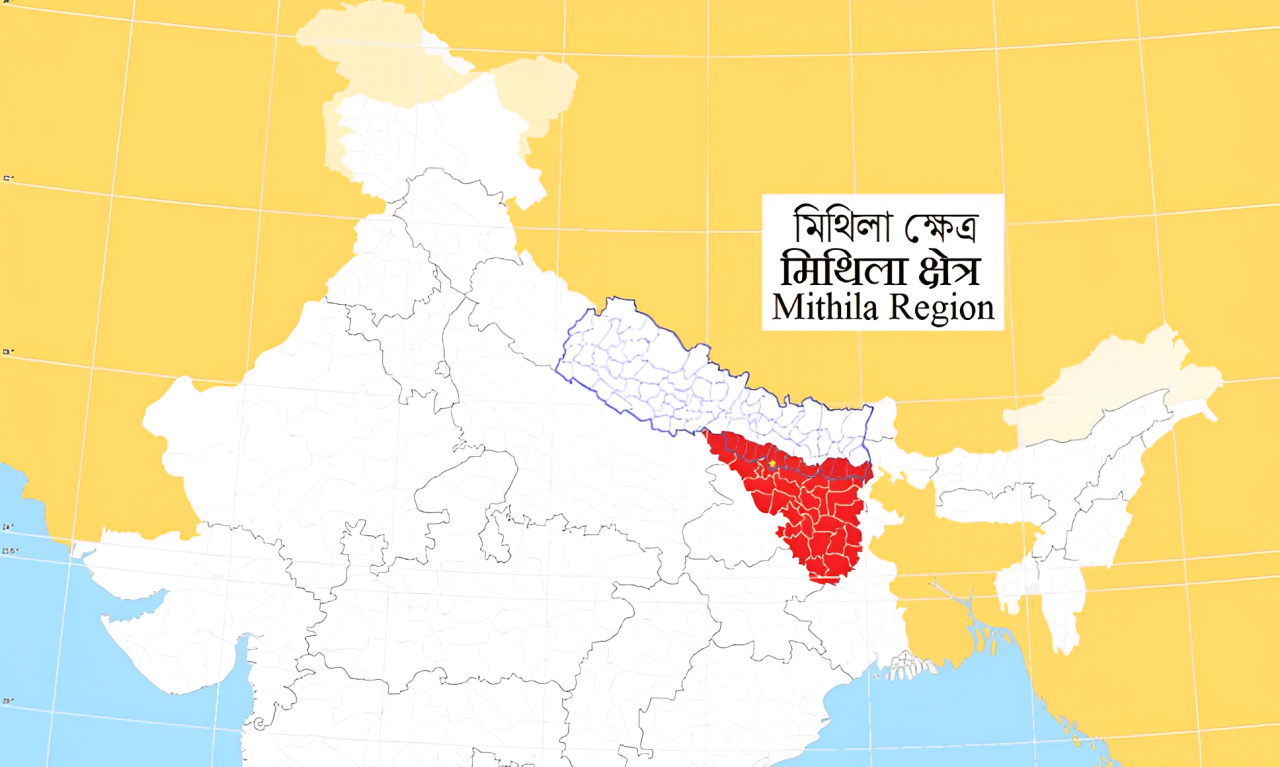
Surrounded by Sitamarhi and East Champaran in the north, Vaishali and Saran in the south, Darbhanga and Samastipur in the east, and Gopalganj in the west, Muzaffarpur grew as a natural crossroads. Ideas passed through it as easily as goods, and cultures met without knocking.
Republics, Resistance, and Renewal
Muzaffarpur history tells us the history of power shifting from Mithila to Vaishali, the heart of the Vrijjian Republic—one of the world’s earliest experiments in republican governance. The Licchavis stood strong enough that even Magadh sought alliances before conflict. When Ajatashatru finally conquered Vaishali, he founded Pataliputra to watch over it, shaping the political destiny of eastern India.
Close by lies Baso Kund, the birthplace of Mahavir, contemporary of Gautama Buddha. Their teachings of non-violence and compassion still flow quietly through the moral veins of the region.
From Empires to Everyday Lives
Over centuries, Muzaffarpur passed through many hands—Harsha Vardhan, the Palas, the Senas, the Tughlaqs, the rulers of Jaunpur, the Nawabs of Bengal, and finally the Mughals. Each left mark, but none erased what came before. Temples stood beside mosques; festivals borrowed colours from one another. Muzaffarpur learned coexistence not from books, but from daily life.
The victory of the East India Company at Buxar in 1764 brought colonial rule. With it came railways and records—but also resistance.
A Boy, a Bomb, and a Brave Silence
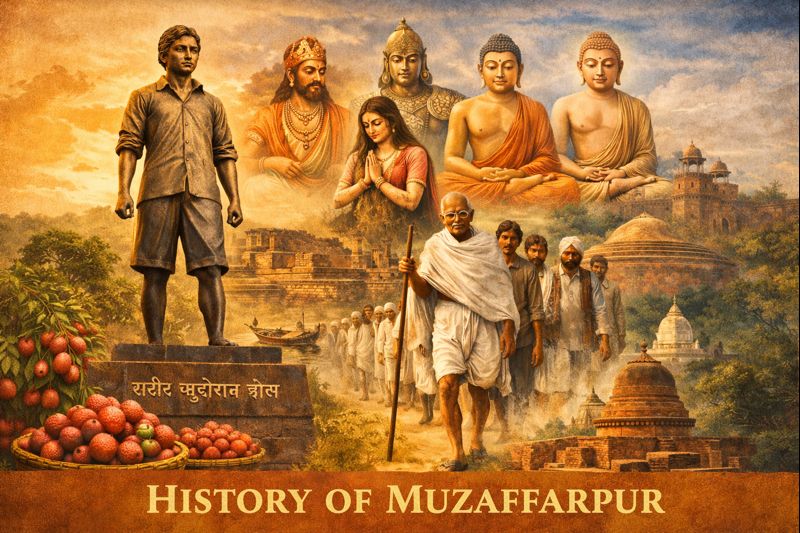
In 1908, Muzaffarpur’s name shook the empire. A young revolutionary, Khudiram Bose, barely eighteen, threw a bomb at a carriage meant for a British judge. The attempt failed; the boy did not. He walked to the gallows smiling, and the town learned the cost of courage. Today, his memorial still stands—not as stone, but as conscience.
Freedom’s Footsteps
Muzaffarpur History is a history of beginning of the Mahatma Gandhi’s people’s movement. When Mahatma Gandhi visited Muzaffarpur in 1920 and again in 1927, something stirred. Meetings turned into movements. Ordinary people discovered extraordinary resolve. The district marched, protested, and endured—quietly but firmly—towards freedom.
Where Cultures Meet, and Litchis Bloom
What makes Muzaffarpur unique is not only its past, but its balance. It stands on the frontier of Hindu and Islamic thought, where traditions merge rather than clash. This diversity has often given birth to remarkable minds—poets, thinkers, reformers—shaped by dialogue, not division.
And then there are the litchis. Shahi and China varieties, sweet and delicate, now travel from these orchards to the world. They are Muzaffarpur’s gift to the present—a reminder that history can also taste like summer.
A Living Legacy
Muzaffarpur does not shout its greatness. It carries it—softly, steadily—like a river beneath the soil. To walk its streets is to walk through time: from earthen furrows of Janak’s fields to the echoing steps of freedom fighters. This land remembers, and in remembering, it teaches us how to belong.
#FollowUs
#Muzaffarpur History
Discover more from Mithila Delights
Subscribe to get the latest posts sent to your email.