Nagarjun (Vaidyanath Mishra) Biography: Janakavi and Voice of the People
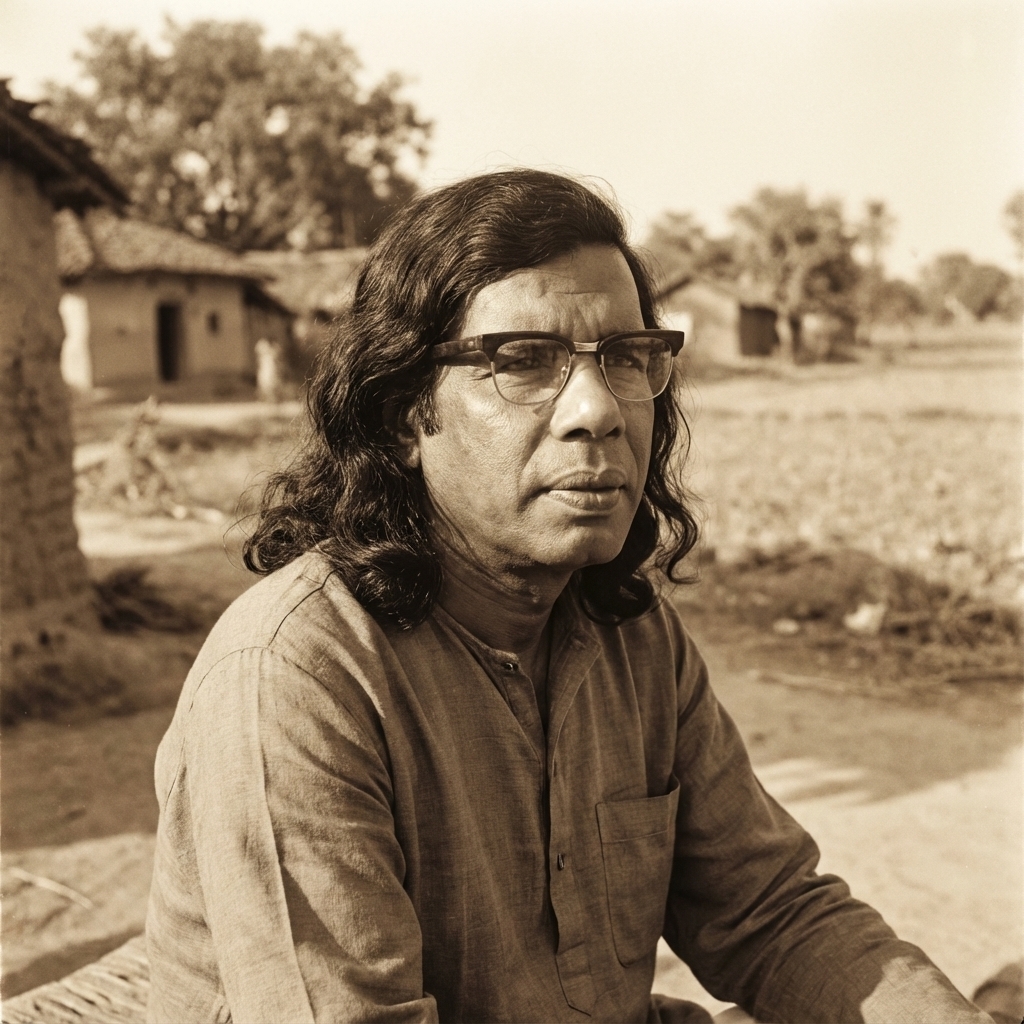
Vaidyanath Mishra (30 June 1911 – 5 November 1998), better known by his pen name Nagarjun, was one of the most powerful and uncompromising literary voices of modern India. Writing mainly in Hindi and Maithili, he earned the title “Janakavi” — the People’s Poet — for his fearless expression of social truth and his deep connection with ordinary lives. His work cut across poetry, novels, short stories, literary biographies, and travelogues, always rooted in lived reality rather than literary ornament.

Early Life and Education
Nagarjun was born on 30 June 1911 in Satlakha Village, Darbhanga district, Bihar, of the Mithila region (present-day Bihar). His early years were shaped by rural poverty, traditional learning, and a restless urge to understand the world beyond his immediate surroundings. Initially trained in Sanskrit, he showed remarkable command over classical texts, but soon began questioning rigid traditions and social hierarchies.
His intellectual journey took him across India and even to Sri Lanka, where he studied Buddhism. This exposure broadened his worldview and sharpened his critical thinking. Though deeply learned, Nagarjun never positioned himself as an ivory-tower intellectual; instead, he remained grounded in the language, pain, and humour of common people.
A Writer Rooted in Reality
Nagarjun’s writing stood apart because of its directness and moral courage. He refused to romanticise suffering or glorify power. His poems spoke of hunger, injustice, political hypocrisy, and human resilience with rare honesty. Whether addressing authoritarian rulers or social inequality, his tone remained sharp, ironic, and often satirical.
He wrote in simple, spoken language, making his poetry accessible to readers beyond academic circles. This clarity did not dilute depth; rather, it strengthened the emotional impact of his work.
Major Literary Contributions
Nagarjun’s literary range was vast:
- Poetry: His poems are known for political awareness, social protest, and compassion for the marginalised.
- Novels: Works such as Ratinath Ki Chachi and Balchanma portray rural society with realism and empathy.
- Short Stories & Essays: These writings reveal his keen observation of everyday life and social contradictions.
- Maithili Literature: He played a crucial role in modernising Maithili writing and giving it national recognition.
His bilingual mastery allowed him to bridge regional and national literary traditions with ease.
Ideology and Public Life
Nagarjun was deeply influenced by leftist thought and remained openly critical of political authority throughout his life. He believed literature should question power, not serve it. This often placed him at odds with establishments, but he never softened his voice for comfort or recognition.
He lived simply, often facing financial hardship, yet remained fiercely independent. For him, writing was not a profession but a responsibility.
Recognition and Legacy
Though he avoided literary elitism, Nagarjun received wide recognition during his lifetime and after. Today, he is regarded as one of the most important voices of progressive Indian literature in the 20th century.
His legacy lies not only in his books but in his courage — the courage to speak plainly, to side with the oppressed, and to remain truthful in an age of compromise.
Death and Enduring Influence
Nagarjun passed away on 5 November 1998 at Khwaja Sarai, Darbhanga district, Bihar,. Yet his words continue to resonate, especially in times of social unrest and political uncertainty. Students, activists, and readers still turn to his poetry for clarity, resistance, and moral strength.
He remains, in the truest sense, a poet of the people — timeless, fearless, and deeply human.
#FollowUs
Discover more from Mithila Delights
Subscribe to get the latest posts sent to your email.