Phanishwar Nath Renu: The Voice of Rural India in Modern Hindi Literature
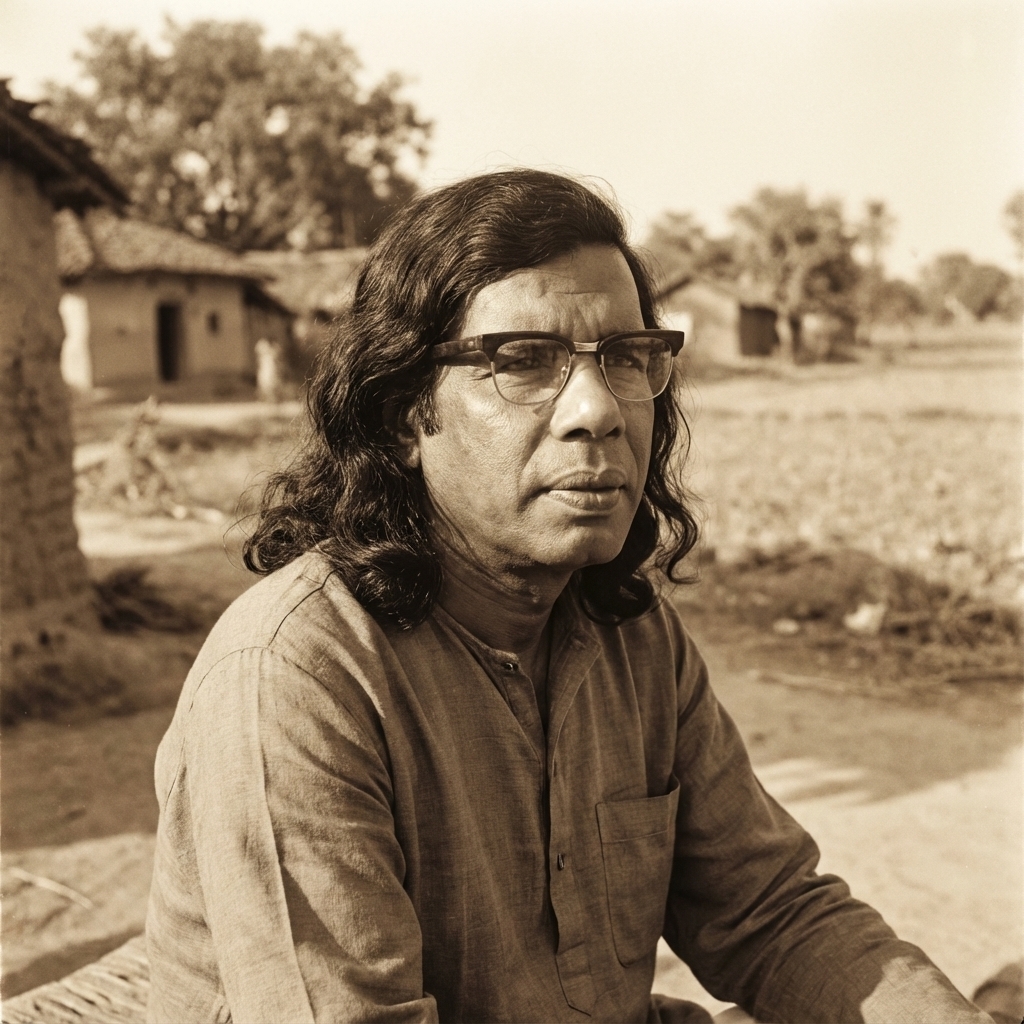
Phanishwar Nath Renu occupies a distinctive and respected place in the history of modern Hindi literature. Known for bringing the rhythms, speech, and soul of rural India into literary focus, Renu emerged as one of the most influential writers of the post-Premchand era. His writing did not merely describe village life; it lived within it, capturing its warmth, contradictions, humour, and hardship with rare authenticity.

Early Life and Background
Phanishwar Nath Renu was born on 4 March 1921 in Araria district of Bihar, then part of the larger Purnea region. His early years were spent in the countryside, among farmers, folk performers, labourers, and small-town characters who would later populate his stories and novels. This intimate familiarity with rural society became the emotional and cultural foundation of his creative work.
Renu’s formal education took place in Bihar and later in Nepal, where he was exposed to political movements and intellectual debates of the time. These formative experiences shaped his deep concern for social justice, grassroots democracy, and the dignity of ordinary people.
A Writer with a Rebel’s Spirit
Renu was not a writer detached from public life. He actively participated in the Indian freedom struggle and later in political movements in Nepal against autocratic rule. His involvement in mass movements sharpened his awareness of power, exploitation, and resistance—concerns that run quietly but firmly through his literature.
Despite his political engagement, Renu never wrote propaganda. His strength lay in portraying life as it is lived, allowing readers to draw their own conclusions from the lived realities of his characters.
Maila Anchal: A Landmark Novel
Renu’s enduring fame rests primarily on his novel Maila Anchal, published in 1954. Set in a fictional village in north Bihar, the novel paints a sweeping picture of rural society in the years following independence. It examines themes of poverty, caste, health, superstition, politics, and change, all woven together through a rich tapestry of voices.
After Premchand’s Godaan, Maila Anchal is widely regarded as the most significant Hindi novel of its time. What set it apart was Renu’s use of regional dialects, folk idioms, songs, and oral traditions—an approach later described as anchalik upanyas (regional novel). This style gave Hindi literature a new depth and vitality.
Literary Style and Contribution
Renu’s writing is marked by:
- A deep empathy for marginalised communities
- Lyrical yet realistic prose
- Use of local dialects without losing literary elegance
- Strong sense of place and cultural memory
His short stories, including works like Panchlight, Parti Parikatha, and Teesri Kasam, are celebrated for their emotional honesty and narrative simplicity. Many of his stories have been adapted for cinema and theatre, further extending his influence.
Humanism at the Core
At heart, Phanishwar Nath Renu was a humanist. He believed that literature should reflect real life, especially the lives of those often ignored by mainstream narratives. His villagers are not idealised symbols; they are complex human beings, capable of kindness, cruelty, hope, and despair.
Even when writing about suffering, Renu retained a quiet optimism—a belief in human resilience and cultural continuity.
Later Years and Legacy
Renu continued to write actively until his health began to decline in the 1970s. He passed away on 11 April 1977, leaving behind a body of work that remains deeply relevant.
Today, Phanishwar Nath Renu is remembered as a writer who democratised Hindi literature, opening its doors to rural voices, folk culture, and regional realities. His work continues to be studied in universities, translated into several languages, and read with admiration by new generations.
Conclusion
Phanishwar Nath Renu was more than a novelist or storyteller; he was a chronicler of lived experience. By giving literary dignity to rural India, he reshaped the scope and sensibility of modern Hindi writing. In doing so, he ensured that the stories of the margins would stand firmly at the centre of Indian literature.
#FollowUs
Discover more from Mithila Delights
Subscribe to get the latest posts sent to your email.